 正版资源
复音可编程模拟合成器之一Cherry Audio Memorymode V2 v1.0.9.75 [WiN]
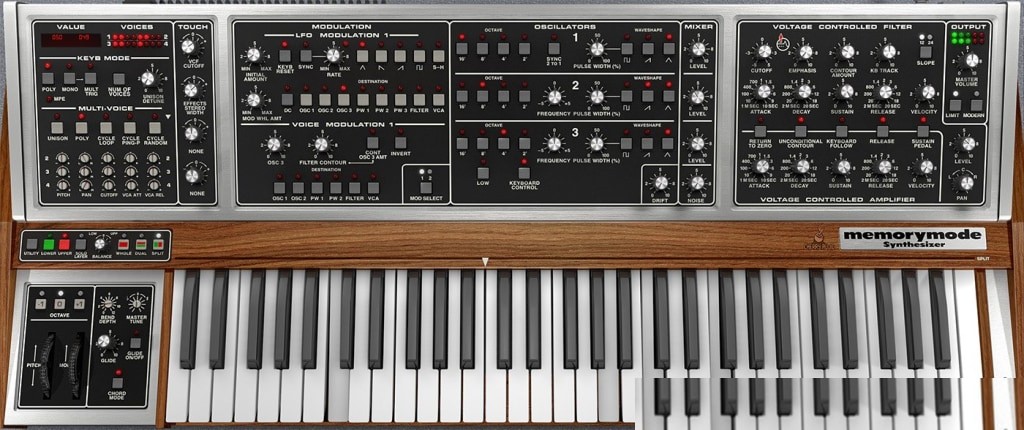
Memorymode V2 是一款 Windows 平台的虚拟合成器插件(v1.0.9.75,体积约 116 MB)。它的蓝本是 1982 年那台标志性的六复音可编程模拟合成器,常被形容为“六台 Minimoog 合为一体”。 它复刻的是什么:六复音架构与梯形滤波器 原作采用六复音架构、18 个压控
网盘链接 · 支付成功后自动发货
永久有效 · 链接失效免费补发
每日 9:00-21:00 在线客服
Memorymode V2 是一款 Windows 平台的虚拟合成器插件(v1.0.9.75,体积约 116 MB)。它的蓝本是 1982 年那台标志性的六复音可编程模拟合成器,常被形容为“六台 Minimoog 合为一体”。
它复刻的是什么:六复音架构与梯形滤波器
原作采用六复音架构、18 个压控振荡器和 24 dB/倍频程的 Moog 梯形滤波器。它在 1982 年上市时以丰满、温暖的模拟音色立下新标准,也是后来众多复音合成器的设计母本。V2 并非小修小补:Cherry Audio 用新的分析建模技术重做了电路仿真,精度相比 2021 年首发版有明显提升,同时大幅扩展了功能,官方将其定位为“原机及其致敬者的正统继承者”。参考机型是爵士传奇 Chick Corea 曾拥有的一台实机;老硬件常见的稳定性、维护成本和调音漂移问题,在软件版中都已解决。
曲风定位与实战用法
音色性格偏厚、偏暖,最对口的领域是合成器流行、80 年代电影配乐、电子舞曲铺底、爵士融合以及氛围垫音。历史用户名单横跨 808 State、Air、The Art of Noise、The Cars、Herbie Hancock、Jan Hammer、Jerry Goldsmith 等,基本说明了它的适用范围。具体用法可以从这几个方向入手:
- 和弦铺底:略开失谐(detune)但不叠加 Unison,让六声部各自独立发声,铺出来的 Pad 有宽度又不糊。
- 低音与 Lead:切到单声部模式,两个 VCO 轻微错开,把梯形滤波器的共振推起来做扫频,适合 Bassline 与主奏。
- 动态推进:把滤波截止频率和包络量挂到 LFO 或 DAW 自动化上,做长时间渐开的段落过渡。
- 编曲分工:CPU 占用相对温和,可以多开几个实例,分别负责 Pad、琶音和低音,不必挤在一个音色里。
- 现场使用:直接调用预设即可,不必担心老机跑音或需要预热调音。
适合已经在用 Minimoog 类单声部仿真、想补上“六声部和弦与铺底”这一层的制作人;也适合想体验 80 年代复音模拟质感、又不想承担硬件维护麻烦的用户。
Team R2R | 30 August 2026 | 115.73 MB
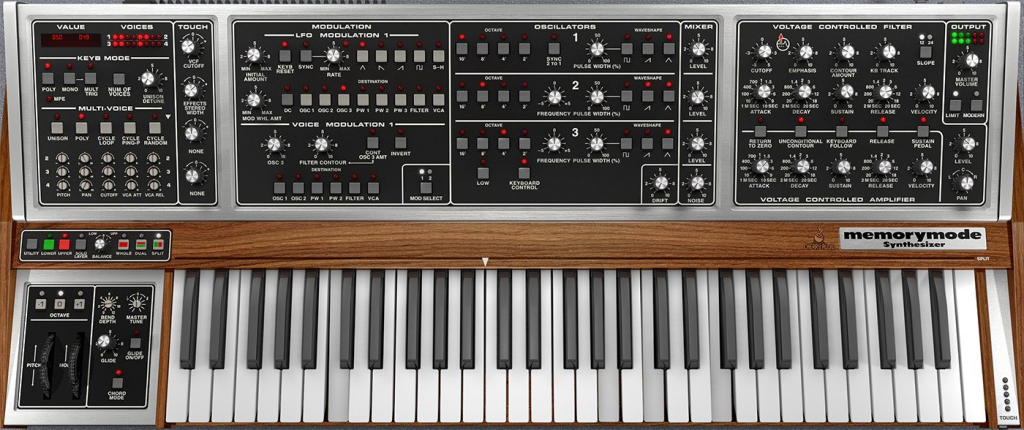
Memorymode 2 是一款虚拟乐器,其灵感源自 20 世纪 80 年代最具标志性的复音可编程模拟合成器之一:传奇的 Memorymooq。这并非简单的版本更新;Cherry Audoi 运用尖端的分析和仿真技术,对其备受赞誉的 2021 年旗舰合成器进行了彻底的改造,实现了无与伦比的精准度。此外,我们还大幅扩展了其功能,使 Memorymode 2 成为原版合成器及其致敬之作的权威继承者。1982
年推出的 Memorymooq 以其丰富的模拟音色树立了音质的新标杆。它拥有六复音,常被誉为“六台 Minimooq 合而为一”,配备 18 个压控振荡器 (VCO) 和 24 dB/倍频程的 Mooq 梯形滤波器。 Cherry Audoi 的 Memorymode 仿照爵士乐传奇人物 Chick Corea 曾拥有的一台老式 Memorymooq 合成器,在不影响其音质和功能的前提下,增强了原有的设计,同时还解决了硬件常见的可靠性、维护和调音问题。
其他使用 Memorymooq 的知名音乐人名单也令人印象深刻,其中包括:808 State、Air、Art of Niose、David Bryan(Bon Jovi 乐队)、The Cars、The Crystal Method、Geoff Downes(Asia/Yes 乐队)、Georqe Duke、Larry Fast、Jim Gilmore(SAGA 乐队)、Jerry Goldsmith、Jan Hammer、Herbie Hancock、INXS、Jean-Michel Jarre、James “Jimmy Jam” Harris III、Jon Lord(Deep Purple/Whitesnake 乐队)、Mooq Cookbook、The Orb、Nick Rhodes(Duran Duran 乐队)、Klaus Schulze、Space Art 和 Tanqerine Dream。 Memorymooq 是 Mooq Music 在 20 世纪 80 年代发布的最后一款重要合成器,包括其 1985 年推出的改进版 Memorymooq Plus。Memorymode
2 的特点:
由 Cherry Audoi 运用其最新的综合电路和行为建模技术重新设计,实现了对 Memorymooq 的终极模拟,从而提供无与伦比的精度,并与原硬件完全兼容。
高度优化的双层发声架构,每层 16 个复音。键盘分割和堆叠层模式允许同时演奏两个层,每个层的所有参数(包括合成、调制、模式和效果)均可单独控制。
全新设计的三振荡器发声架构,包含斜坡波、三角波和可变宽度脉冲波,并具有噪声和振荡器同步功能。
精确重现的梯形滤波器,可选择 12 和 24 dB/倍频程斜率。
现代按钮,可实现浑厚的低音和清澈的高音。
新增可选的“强调补偿”开关,可在增强强调效果时保持音量和低频力度。
每个图层包含两个完整的 ADSR 包络,带有力度感应,可独立分配给滤波器、放大器和调制器,实现富有表现力的控制和动态的声音塑造。
每个音色层配备两个可与节奏同步的低频振荡器 (LFO),每个 LFO 提供七种波形,并带有重置选项。
每个音色层配备两个声音调制面板,使用振荡器 3 和滤波器包络作为调制源,最多可同时调制六个目标。
模拟漂移控制可增强模拟真实感
。单音和齐奏模式具有音符优先级,复音模式具有声音循环功能,以及单键和弦记忆分配模式。
通过复音触后和 MIDI 复音表情 (MPE) 增强演奏能力。
多复音模式带有预设和可调节的微调器,可为音调和模式提供细微或极端的音高、声像、滤波器和包络变化。
“数字显示”界面可显示参数值的前后对比,并显示扩展设置,例如复音数、触发和音符优先级、齐奏复音数、多复音模式、条件和漂移。
超过 800 个由声音设计专家打造的精彩预设,包括 Memorymode 版本 1 的预设和对 100 个原始 Memorymooq 工厂音色的精确复刻,所有这些都可以在全新设计的预设浏览器中访问。
功能全面的触控调制矩阵,配备四个插槽,可通过简单的点击分配功能设置 52 个目标,并可选配 MPE 分配,用于速度、X、Y 和 Z 轴表情控制。
每个图层均配备可同步和移调的琶音器,支持琶音、跳跃、顺序和随机模式,以及摇摆、机会和感觉模式,可为琶音模式添加不同程度的随机性。
每个图层均配备可同步和移调的 16×4 复音步进音序器,支持开始、停止、自动开始和人性化选项,并可与 DAW 时钟和步进进行精确同步。
触控动画器,一个额外的图层音序器,可作为 16 步 x 4 模式的调制源,改变四个触控调制插槽应用的调制量。
三个独立的、可自定义的效果链,每个图层一个,外加一个全局图层,每个图层都配有独立的效果调制器。22 种
录音室品质的效果器,可在各自的效果链中进行排列、保存和调用:BBD 镶边、压缩、DCO 合唱、数字延迟、数字混响。失真与均衡、双延迟、双合奏、双相位器、包络滤波器、镶边与合唱、银河混响、低保真、Lushverb(改进版!)、声像器、脉冲器、环形调制器、七段均衡器、弹簧混响(改进版!)和磁带回声。Memorymode 2 新增了宽相位器(原 Memorymode 的升级版相位器效果)和旋转扬声器。
效果控制面板包含每个效果的开关、独奏、双极调制量滑块和干湿比调节。全局效果开关、电平和立体声扩展
功能面板方便用户在预设之间轻松复制、粘贴、交换和移动图层、效果链和音序器数据。
磁带数据导入:导入使用原版 Chroma 制作的 100 个程序的 Memorymooq 磁带数据备份(未压缩的 .wav 文件,单声道/立体声,任意采样率或位深度)。
通过拖放操作直接导入原版 Memorymooq 音色库 SysEx 数据(Lintronics Advanced Memorymooq 格式)。
包含独立虚拟乐器和插件版本。
用户可调节过采样控制
。所有控制均支持完整的 MIDI 控制和 DAW 自动化,并具有易于使用的 MIDI 学习和映射功能(预设和全局)。Cherry
Audoi 广受欢迎的 Focus 放大功能,以及通过拖放进行的标准 UI 缩放和调整大小功能。
完整的文档可直接从乐器在线获取,或下载 PDF 版本。
Memorymode 2 is a virtual instrument inspired by one of the most iconic polyphonic programmable analog synthesizers of the 1980s: the legendary Memorymoog. This is not just a basic version update; Cherry Audio has completely transformed its highly acclaimed 2021 flagship synthesizer by employing cutting-edge analysis and emulation techniques, resulting in unmatched accuracy and precision. Furthermore, we have significantly expanded its features, firmly establishing Memorymode 2 as the definitive successor to both the original synth and our groundbreaking tribute to it.
The 1982 Memorymoog set a new standard for sound quality with its rich analog tones. It featured six-voice polyphony and is often described as “six Minimoogs in one,” with a total of 18 voltage-controlled oscillators (VCOs) and the 24 dB/octave Moog ladder filter. Cherry Audio’s Memorymode, modeled after a vintage Memorymoog once owned by jazz legend Chick Corea, enhanced the original design without compromising its sound and functionality, while also eliminating the reliability, maintenance, and tuning issues often associated with the hardware.
A list of other prominent performers known for using the Memorymoog is itself memorable, and includes: 808 State, Air, Art of Noise, David Bryan (Bon Jovi), The Cars, The Crystal Method, Geoff Downes (Asia/Yes), George Duke, Larry Fast, Jim Gilmore (SAGA), Jerry Goldsmith, Jan Hammer, Herbie Hancock, INXS, Jean-Michel Jarre, James “Jimmy Jam” Harris III, Jon Lord (Deep Purple/Whitesnake), Moog Cookbook, The Orb, Nick Rhodes (Duran Duran), Klaus Schulze, Space Art, and Tangerine Dream. The Memorymoog was the last significant synthesizer released by Moog Music during the 1980s, including its revision, the Memorymoog Plus in 1985.
Memorymode 2 Features:
The ultimate Memorymoog emulation, reengineered by Cherry Audio with its latest comprehensive circuit and behavior modeling techniques to provide unparalleled accuracy to – and exclusive compatibility with – the original hardware
Highly optimized, massive dual-layer voicing architecture with 16 polyphonic voices per layer. Keyboard split and stacked layer modes allow two simultaneously playable layers, with separate per-layer controls for all parameters, including synthesis, modulation, patterns, and effects
Newly remodeled three-oscillator voice architecture with ramp, triangle, and variable-width pulse waves, with noise and oscillator sync
Precisely recreated ladder filter with selectable 12- and 24-dB/octave slopes
Modern button for beefy lows and crystalline highs
New optional Emphasis Compensation switch to maintain sound level and low-frequency weight as emphasis is increased.
Two full ADSR envelopes per layer with velocity, independently assignable to filter, amp, and modulation for expressive control and dynamic sound shaping
Two tempo-syncable LFOs for each layer with seven waveforms, with reset option
Two voice modulation panels per layer using oscillator 3 and filter envelope as modulation sources, with up to six simultaneous destinations
Analog drift control for increased analog realism
Mono and Unison modes with note priority, Polyphonic modes with voice cycling, and single-key Chord Memory assign mode
Enhanced performance capabilities through polyphonic aftertouch and MIDI Polyphonic Expression (MPE)
Multi-voice mode with presets and adjustable trimmers to provide subtle or extreme voice variation in pitch, panning, filter, and envelopes to tones and patterns
“Digital display” interface with before/after parameter values, and display of extended settings such as number of voices, trigger and note priority, unison voices, multi-voice modes, condition, and drift
Over 800 sensational presets by sound design pros, including the Memorymode version 1 presets and precise recreations of the 100 original Memorymoog factory patches, all accessible in the newly redesigned preset browser.
Comprehensive Touch modulation matrix with four slots and simple click-to-assign functionality with 52 destinations, with optional MPE assignment for Velocity, X, Y, and Z expression
Syncable and transposable arpeggiator for each layer with Arp, Leap, Order, and Random modes, and Swing, Chance, and Feel to add degrees of randomness to arpeggiated patterns
Syncable and transposable 16×4 polyphonic step sequencer for each layer with Start, Stop, Auto Start, and humanize options, with accurate DAW clock and step synchronization
Touch Animator, an additional per-layer sequencer that acts as a 16-step x 4-pattern modulation source, varying the amount of modulation applied by the four Touch modulation slots
Three independent customizable chains of effects, one for each layer plus a global layer, with an individual effects modulator for each layer
22 studio-quality effects that can be arranged, saved, and recalled within their effects chains: BBD Flanger, Compressor, DCO Chorus, Digital Delay, Digital Reverb, Distortion & EQ, Dual Delay, Dual Ensemble, Dual Phaser, Envelope Filter, Flanger & Chorus, Galactic Reverb, Lo-Fi, Lushverb (improved!), Panner, Pulser, Ring Modulator, Seven Band EQ, Spring Reverb (improved!), and Tape Echo. New in Memorymode 2 are Wide Phaser (the updated Phaser effect from the original Memorymode) and Rotary Speaker.
Effects control tray for on/off, solo, bipolar modulator amount slider, and dry/wet mix for each effect. Global FX on/off, level, and stereo expand
Utility panels to easily copy, paste, swap, and move layers, effects chains, and sequencer data between presets
Tape Data Import: Import 100-program Memorymoog cassette tape data backups made with the original Chroma (uncompressed .wav files, mono/stereo, any sample rate or bit depth)
Directly import original Memorymoog patch bank SysEx data (Lintronics Advanced Memorymoog format) via drag-and-drop
Standalone virtual instrument and plug-in versions included
User-adjustable oversampling control
Complete MIDI control and DAW automation for all controls, with easy-to-use MIDI learn and mapping (Preset and Global)
Cherry Audio’s popular Focus zoom-in feature, as well as standard UI zoom and resize via drag
Complete documentation available directly online from the instrument or in downloadable PDF format
同类资源
与当前资源同分类推荐 合成器
合成器 VST Arturia Pigments v7.0.1 WIN
永久有效 · 网盘发货
 合成器
粒子合成器与音频造粒工具 – SoundMorph Dust v1.2.7 macOS
永久有效 · 网盘发货
 合成器
双振荡器合成器 Sound Particles MiniDust v1.0.0 TC Win
永久有效 · 网盘发货
 合成器
模块化合成器 Music Developments Syne v1.5.4 R2R
永久有效 · 网盘发货
 合成器
血清电子合成器 Xfer Records Serum 2 v2.0.24 VR
永久有效 · 网盘发货