 正版资源
血清合成器皮肤+17883预设 Xfer Records Serum v1.368 + Skin + 17883 Preset Win
Xfer Records Serum v1.368 加上一套皮肤与 17883 个预设,是一份围绕波表合成的完整工作环境。Serum 是 Xfer Records 的第一款合成器,出自那位做出持久好用 LFO 工具的作者之手,目标很直接:做一台「梦想合成器」,从一个面向工作流的界面里产出高质量声音。
网盘链接 · 支付成功后自动发货
永久有效 · 链接失效免费补发
每日 9:00-21:00 在线客服
Xfer Records Serum v1.368 加上一套皮肤与 17883 个预设,是一份围绕波表合成的完整工作环境。Serum 是 Xfer Records 的第一款合成器,出自那位做出持久好用 LFO 工具的作者之手,目标很直接:做一台「梦想合成器」,从一个面向工作流的界面里产出高质量声音。这份资源解决的制作问题是——你想要波表那种会动的音色,但既不想从零画波形,也不想在杂乱的面板之间反复找调制。它把引擎、外观和大量现成音色一次性摆在你面前。
17883 个预设:先当音色库检索,再当波表教材
预设数量是这个包最直观的部分。合理用法不是从头翻到尾,而是先按用途筛:低音、拨弦、弦乐与明亮音色各挑几个起点,工程里固定三到五个常用预设,剩下的当备选。Serum 自带约 450 个工厂声音,由一支补丁设计师团队完成,可以作为判断基准——里面既有甜美的音符和明亮模糊的弦乐,也有坚硬、深沉、切割感强的低音,以及速度极快的「弹拨」。第三方预设是在这个基准上的延伸,风格跨度更大,也更容易撞到重复的套路。
更值得花时间的是把预设拆开看:它选了哪张波表、滤波器怎么设、包络和 LFO 怎么分配、宏控制指向哪里。波表合成的声音特征来自一组数字波形,靠手动或 LFO、包络扫描波表来引入运动与音调复杂度,预设正好是这套逻辑的现成范例。放进工程时注意一点:预设往往自带效果链和宏映射,混音前先分清哪些属于音色本身、哪些只是后期装饰,否则很容易在总线上一层层叠加同样的空间感。
皮肤与面板:波表、滤波器、包络、LFO 同屏
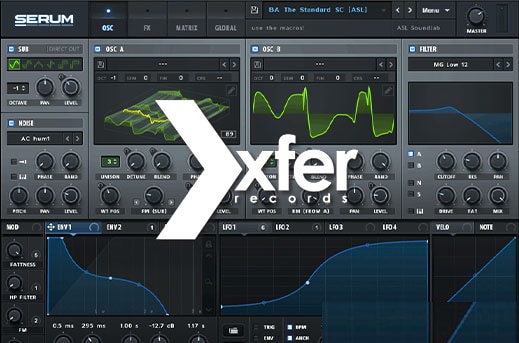
皮肤替换的是外观,不改变声音引擎,作用在于长时间调音时的视觉负担。Serum 的界面本身已经足够直接:灰色背景把波表、滤波器、包络和 LFO 的微妙颜色衬得很清楚,几乎不需要翻手册就能上手。换皮肤后建议先确认控件位置,尤其是做自动化时别认错旋钮。真正决定声音的还是那一大片波表区域——扫描方式、扫描速度、调制源的选择,决定了音色是静止的还是流动的。除了现成波表,它也提供了成套工具让你自己滚动、塑造波表,适合需要独特运动感的段落。
格式方面提供 VST、AAX 与 AU,并有 32 位和 64 位版本,安装前先确认宿主位数,避免白装。适合的场合是电子音乐里的主音与低音、配乐里需要缓慢演变的铺底,以及任何你想让音色随时间呼吸而不是一锤定音的地方。
你会获得
血清合成器 皮肤 + 17883预设

血清的光滑的界面掩盖了一个极其灵活的波形合成器。
血清是第一个合成器从Xfer记录,创造者的持久有用的LFO工具。它的目标很简单:成为一个“梦想合成器”,在这种情况下,它转化为一个波形合成器,从一个“面向工作流”的界面产生高质量的声音。
Wavetables最初是由PPG的Wolfgang Palm开发的,这个概念后来被Waldorf和Access(以及其他公司)采用。这种独特的声音来自一组数字波形,统称为波表。通过手动或通过lfo和包络等调制器扫描表来引入运动和音调复杂性。也许是因为潜在的复杂性,它是一种非常适合VST-land图形世界的合成类型,因此存在许多例子,在保真度和波表数量上胜过旧硬件。
可用的VST, AAX和AU格式(32位和64位),血清比它的无阻碍面板暗示更深。它提供了大量准备好的波形表和广泛的工具包来滚动和塑造您自己的波形表。就梦想而言,这是一个好的开始……
简单明了
在简单而无痛的安装之后,您将看到一个无比直接和清晰的界面。考虑到我发现自己每天要处理的杂乱、混乱和不一致的合成器面板的数量,这一个是令人愉快的。我甚至找不到灰色背景的缺点,因为它完美地突出了微妙颜色的波表、滤镜、信封和lfo。我怀疑有人会急迫地去找这本手册。
在一个优秀的补丁设计师团队的帮助下,血清船有大约450个工厂声音。快速细读一下,你可能会发现有大量甜美的音符和明亮、模糊的琴弦,正如你所料。然而,同样令人印象深刻的是,坚硬、深沉和切割的低音,加上比竖琴手更快的“弹拨”。漫步在这个系列中,给你留下的印象是闪闪发光的鞋面和坚如磐石的鞋底,上面点缀着锋利的铅。我确实感到奇怪的是,氛围和电影音效设计的明显能力没有得到更充分的探索,同时我自己也很喜欢这样做。
运动中的表格
四个可能的声源包括两个独立的波振荡器,一个子振荡器和一个豪华的噪声发生器。这是一个既熟悉又合乎逻辑的架构,这意味着没有什么能阻止你立即投入其中。
选择一个单一的振荡器未经处理的过滤器或效果,我开始试听工厂的波表。它们是从“模拟”、“数字”、“光谱”、“用户”和“元音”等类别中挑选出来的,虽然这些名称能让你很好地了解它们的含义,但真正打动你的是它们无处不在的清晰。有超过140张表可供选择,我本可以愉快地花几天时间选择波表,并使用“WT Pos”旋钮手动浏览它们。相反,我将LFO设置为自动更新位置,通过简单地将所选LFO的标题拖到相关旋钮上来完成任务。这是分配调制的几种方法之一,从思想到执行大约需要一秒钟。调制范围由蓝色弧线显示,在这种情况下,我在旋钮周围扩展,以便扫描整个表。您可以通过标题贴片上的数字看到每个调制器有多少个目的地。
作为波表合成的长期粉丝,我渴望做出一个原创的表。在Serum中,一个波表由多达256个单周期波形组成,称为帧。虽然编辑现有的表很简单,但我已经有足够的信心从头开始。单击任一振荡器图形窗口中的铅笔图标将打开波表编辑器。这是一家库存充足的木工店,通过进口音频,绘制波形或数学公式提供表结构。绘制波形是一种看起来令人难以置信的令人兴奋的艺术——直到你尝试它。幸运的是,有更好的方法来填充一系列帧。血清可以动态插值(即;用交叉衰落或光谱变形来填补波之间的空白。因此,最终的桌子是平滑的、忙乱的还是有瑕疵的过渡完全在你的控制之下。
如果你选择导入WAV,无论是到当前帧或填充整个表,你不应该期望常规的样本播放,虽然它是可能的重新合成过程中创建的材料是可识别的-语音和鼓循环是非常有趣的实验。任何在近乎黑暗的环境中花了不健康的时间来研究华尔道夫的“19-20”时间表的人都会证明,用最少的音节可以实现很多目标,而血清可以填充整个对话!表的最大大小约为2MB
Serum’s slick interface belies an extremely flexible wavetable synthesizer.
Serum is the first synthesizer from Xfer Records, creators of the enduringly useful LFO Tool. Its aims are simple: to be a ‘dream synth’, which in this case translates to a wavetable synthesizer producing high-quality sound from a ‘workflow-oriented’ interface.
Wavetables were first developed by Wolfgang Palm of PPG, the concept later taken up by Waldorf and Access (amongst others). The distinctive sound is derived from groups of digital waveforms, known collectively as wavetables. Movement and tonal complexity are introduced by scanning the table, either manually or by modulators such as LFOs and envelopes. Perhaps because of the potential for complexity, it’s a synthesis type well-suited to the graphical world of VST-land, hence the many examples that exist, trumping the older hardware in fidelity and in the number of wavetables.
Available in VST, AAX and AU formats (both 32- and 64-bit), Serum is much deeper than its unencumbered panel implies. It ships with a large vault of prepared wavetables and an extensive toolkit to roll and shape your own. As dreams go, it’s a good start…
Plain & Simple
After a brief and pain-free installation, you’re presented with an interface of unparalleled directness and welcoming clarity. Given the number of messy, confusing and inconsistent synth panels I find myself juggling each day, this one is a delight. I couldn’t even find fault with the grey background as it perfectly highlights the subtly coloured wavetables, filters, envelopes and LFOs. I doubt anyone will seek the manual with any great urgency.
Aided by a crack team of patch designers, Serum ships with approximately 450 factory sounds. A quick perusal reveals a wealth of sweet pads and bright, fuzzy strings, as you’d probably expect. Equally impressive, though, are the hard, deep and cutting basses, plus more snappy ‘plucks’ than a harpist on speed. Strolling through the collection, you’re left with an impression of shimmering uppers and rock-solid bottoms, peppered with razor-sharp leads. I did find it odd that the obvious capacity for atmospherics and cinematic sound design wasn’t more fully explored, whilst simultaneously relishing doing so myself.
Tables In Motion
The four possible sound sources consist of two independent wavetable oscillators, a sub-oscillator and a deluxe noise generator. It’s an architecture as familiar as it is logical, which means there’s nothing to stop you plunging in right away.
Selecting a single oscillator unprocessed by filter or effects, I began auditioning the factory wavetables. They’re selected from categories such as Analog, Digital, Spectral, User and Vowel, and while the names give a good idea what to expect, it’s the pervasive clarity that hits you. With over 140 tables to choose from, I could have happily spent days selecting wavetables and manually hurtling through them using the ‘WT Pos’ knob. Instead, I set an LFO to automatically update the position, achieving the task by simply dragging the header tile of a chosen LFO to the knob in question. This is one of several methods of assigning modulation and took around a second from thought to execution. The modulation range is shown by a blue arc, which in this case I extended around the knob in order to scan the whole table. You can see how many destinations each modulator has by numbers on the header tiles.
A long-time fan of wavetable synthesis, I was eager to make an original table. In Serum, a wavetable consists of up to 256 single-cycle waveforms, known as frames. Although it’s straightforward to edit an existing table, I already felt confident enough to start from scratch. A click of the pencil icon in the graphical window of either oscillator opens the wavetable editor. This is a fully stocked carpenter’s shop offering table construction by means of imported audio, drawn waveforms or mathematical formulae. The drawing of waveforms is one of those arts that seems incredibly exciting — until you try it. Fortunately, there are far superior ways to populate a range of frames. Serum can dynamically interpolate (ie. fill in the gaps) between waves using either crossfading or spectral morphing. It’s therefore entirely under your control whether the final table has smooth, buzzy or glitchy transitions.
If you opt to import a WAV, either into the current frame or to fill the whole table, you shouldn’t expect regular sample playback, although it is possible for the resynthesis process to create material that’s recognisable — speech and drum loops are great fun to experiment with. Anyone who’s spent unhealthy hours in near-darkness probing Waldorf’s ‘19-20’ wavetable will testify that a lot can be achieved with a minimal assortment of syllables, and Serum can cram in whole conversations! The maximum table size weighs in at around 2MB but most are much smaller. If you import data from large WAVs, it is truncated when the table is built.
The manual features tutorials aimed at creating high-quality wavetables from the output of other soft synths. However you choose to do it, your creations (or favourites from the factory tables) can be exported for use externally. Initially the supported formats were 8-bit (aimed at certain hardware modulars, eg. Wiard) or 32-bit WAV. Cheekily, I requested another option and was quietly stunned to see an update posted on Xfer’s forum soon afterwards. Serum now includes 16-bit WAV export too, which by happy coincidence is perfect to feed the PCM oscillators of my Roland V-Synth. My blagging wasn’t entirely selfish because plenty of other instruments can benefit from exotic digital waveforms too.
The effects rack can be dynamically re-ordered and most of its parameters modulated.
The effects rack can be dynamically re-ordered and most of its parameters modulated.
Remaining within Serum, there’s a huge number of ways that waveforms can be manipulated. This powerful magic is stored in the lengthy Warp menu. Warp’s modes and parameters are unique to each oscillator and the results can sound like a mega-sophisticated tone control one moment, a psychedelic waveform twister, wrapper and bender the next. The less adventurous may prefer to start with a familiar process such as PWM, but even this isn’t fixated on squarewaves — it’ll squeeze anything you throw at it. At the other end of the adventure spectrum, user-customisable ‘wave remaps’ are probably the pinnacle of advanced waveform squishing. Whatever Warp mode you choose, each is a great candidate for modulation, from sources located a few pixels away.
Continuing to cherry-pick through the Warp menu, there are various types of sweet, clean-sounding sync and a quantise option that turns everything decidedly nasty and rate-reduced. After that it’s extremes all the way, courtesy of AM, FM and RM (Ring Mod). All these modes force the otherwise pristine oscillators beyond their usual comfort zone.
With wide-spread waveform mashing taking place, the best way to grasp the effect of each Warp mode is to switch to the 2D view. With a single click, the scrolling wavetable becomes an invaluable real-time waveform display.
Last but not least, voices may be stacked in a powerful unison mode. The extra voices can be detuned for extra lushness, but the freakiest stuff comes with the introduction of Warp or wavetable position offsets. This makes each unison voice unique, although with a corresponding CPU cost.
All your modulation connections in one convenient location.
All your modulation connections in one convenient location.
The sub oscillator is basic (and no less useful for being so), but the noise generator is a bit special. It’s a stereo sample player loaded, as you’d hope, with noise of every colour. But it doesn’t stop there. Joining the noise are sampled ambient whooshes, windchimes, vinyl crackles, dripping water and atmospherics galore. Adding samples of your own is as easy as dropping them into Serum’s ‘Noises’ folder, remembering that stereo samples consume twice as many voices. This could be an issue if you’re prone to extravagant CPU-taxing chords.
主页
https://xferrecords.com/products/serum
同类资源
与当前资源同分类推荐 合成器
合成器 VST Arturia Pigments v7.0.1 WIN
永久有效 · 网盘发货
 合成器
粒子合成器与音频造粒工具 – SoundMorph Dust v1.2.7 macOS
永久有效 · 网盘发货
 合成器
双振荡器合成器 Sound Particles MiniDust v1.0.0 TC Win
永久有效 · 网盘发货
 合成器
模块化合成器 Music Developments Syne v1.5.4 R2R
永久有效 · 网盘发货
 合成器
血清电子合成器 Xfer Records Serum 2 v2.0.24 VR
永久有效 · 网盘发货